
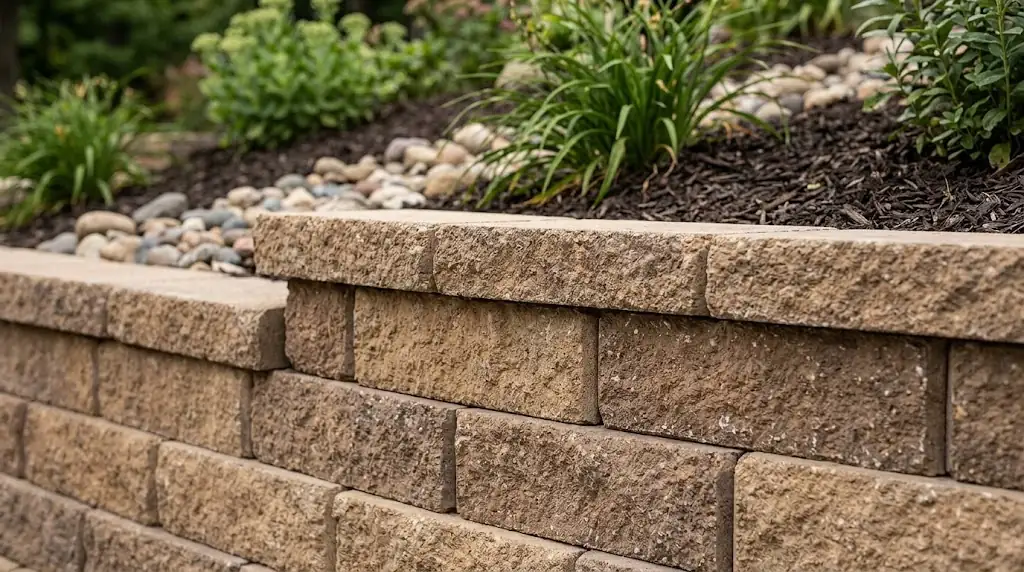
Chattanooga’s landscape is beautiful, but it isn’t flat. Between the ridges, the river bluffs, and the rolling terrain that stretches out toward Signal Mountain and Lookout Mountain, a huge number of properties in the area deal with slopes that erode, wash out, or simply waste usable yard space. At Chattanooga Pavers, we design and build retaining walls throughout Chattanooga, TN that hold back soil, stop erosion, and turn unusable sloped ground into functional, attractive space.
Why So Many Chattanooga Properties Need Retaining Walls
This region’s terrain is a direct product of its geology — the ridge-and-valley landscape that makes the area so scenic is the same terrain that leaves a lot of yards with real grade changes. Left unaddressed, sloped soil erodes over time, especially given how much rain this area sees in spring and early summer. That erosion can undermine tree roots, wash mulch and topsoil into the street, and in more serious cases threaten the stability of a driveway, patio, or even a home’s foundation if the slope is close enough.
A properly engineered retaining wall solves this by holding soil in place through structural design rather than hoping gravity and grass roots do the job. Beyond the erosion control, retaining walls also open up sloped yards for actual use — turning a steep, unusable hillside into a flat, usable terrace for a garden, patio, or lawn space.
Retaining Wall Applications We Handle
- Slope stabilization walls to stop erosion on grades too steep to landscape safely otherwise
- Terraced garden walls that break a steep yard into multiple flat, usable levels connected by steps
- Property line and grade change walls where a neighboring lot sits at a different elevation and needs a clean, structural transition
- Seat walls built at a comfortable sitting height, often used to frame a patio or fire pit area while doubling as extra seating
- Raised planting bed walls that define garden areas while managing soil containment
Engineering Matters More Here Than Almost Any Other Hardscape
A retaining wall isn’t just a stacked decorative feature — it’s a structural element holding back real, ongoing soil pressure, and that pressure increases significantly when soil is saturated after heavy rain. Building a wall that looks right but isn’t engineered correctly is one of the most common and costly hardscape mistakes we see when called in to fix a failing wall someone else installed. Our approach includes:
- Proper base excavation and compacted gravel footing, extending below the frost line and providing a stable, well-draining foundation for the wall itself
- Geogrid reinforcement for taller walls, anchoring the wall back into the soil behind it to resist the outward pressure of the retained earth
- Drainage systems behind the wall, typically a perforated drain pipe wrapped in gravel, which relieves hydrostatic pressure that would otherwise push walls forward or cause them to fail over time — this is one of the single most important details on any retaining wall, especially in a climate as wet as Chattanooga, TN
- Proper wall batter (backward lean), engineered into the design to counteract soil pressure over the life of the wall
Walls above a certain height typically require engineering review and permitting depending on your specific jurisdiction, and we manage that process for you so the wall is both code-compliant and actually built to last.
Material and Style Options
Retaining walls don’t have to look purely utilitarian. We work with a range of segmental retaining wall block systems and natural stone options, and can match wall material to your home’s existing hardscape and architecture:
Segmental concrete block walls offer a clean, modern look with strong engineering performance and a wide range of color and texture options.
Natural stone walls, either dry-stacked or mortared, provide a more traditional, organic appearance that fits well with wooded or rustic properties.
Boulder walls for larger-scale slope stabilization projects where a more rugged, natural look is the goal.
Textured block systems designed to mimic natural stone at a lower cost than true stone construction, popular for mid-sized residential walls.
Our Installation Process
- Site assessment and design, evaluating soil type, slope severity, wall height, and drainage patterns specific to your property
- Excavation and base preparation, including a compacted gravel footing sized to the wall’s height and engineering requirements
- First course leveling, the single most important step for a wall that stays straight and stable over its lifetime
- Wall construction with proper batter, building up course by course with backfill and compaction happening in tandem, not all at once at the end
- Drainage installation, placing perforated pipe and gravel backfill behind the wall as construction progresses
- Cap installation and finish grading, completing the wall and restoring the surrounding landscape
Fixing Failing Walls
We also get called in frequently to repair or rebuild retaining walls that are bulging, leaning, or actively failing — often the result of a wall built without proper drainage or base preparation in the first place. In many cases, a failing wall is a sign of a design problem rather than something that can be patched, and we’ll give you an honest assessment of whether repair or full rebuild is the right call before any work begins.
Protecting Your Property for the Long Term
A well-built retaining wall is one of the more consequential hardscape investments you can make, since it directly affects drainage, soil stability, and usable space on sloped ground. Done right, it’s also one of the longest-lasting — a properly engineered wall with good drainage will outlast almost anything else in your yard.
If erosion, an unusable slope, or a failing existing wall is a problem on your property, our team at Chattanooga Pavers can assess the site and design a solution built to actually hold. Contact us to schedule your retaining wall consultation.