
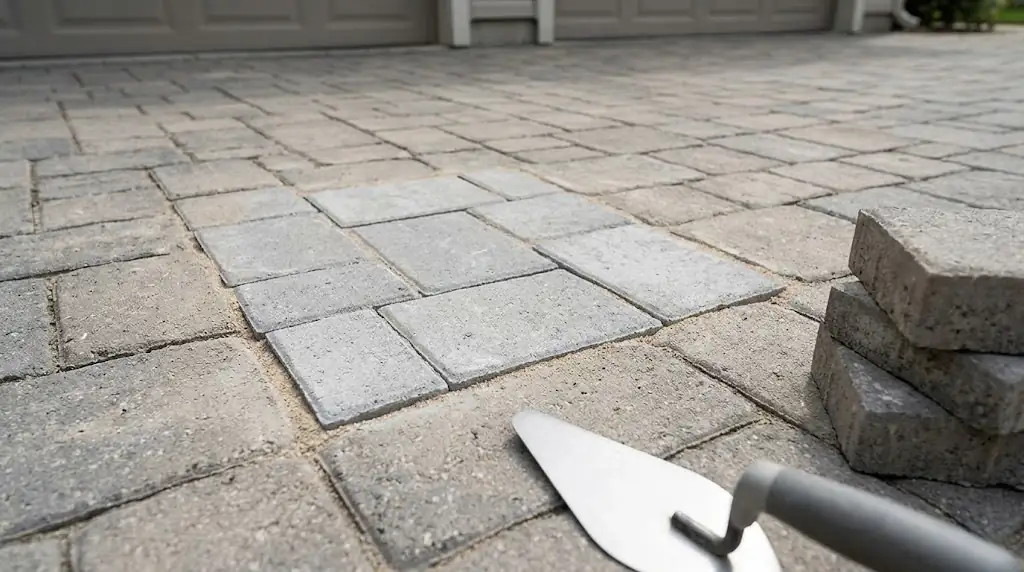
Not every paver problem means starting over. Sunken sections, weeds pushing up through joints, shifting edges, or a handful of cracked units are common issues that develop over years of weather exposure and use — and in most cases, they’re fixable without tearing out the whole installation. At Chattanooga Pavers, we repair paver patios, driveways, walkways, and pool decks throughout Chattanooga, TN, restoring them to solid, level, good-looking condition.
The Advantage of Repairing Pavers vs. Concrete
This is actually one of the biggest long-term advantages of paver hardscapes over poured concrete, and it’s worth understanding even if your pavers are holding up fine right now. Because a paver surface is made of individual interlocking units rather than one continuous pour, damage can almost always be isolated and corrected without disturbing the rest of the installation. A cracked paver, a sunken section, or a stained area can be addressed directly, and once complete, it blends back into the surrounding surface. Poured concrete doesn’t offer that option — a crack in a slab typically means patching (which rarely matches) or replacing the entire section.
Common Paver Problems We Fix
Sunken or settled areas. Over time, sections of a paver surface can settle unevenly, usually due to base erosion, poor original compaction, or water infiltration beneath the surface. This is especially common in Chattanooga, TN given the region’s heavy seasonal rainfall, which can gradually wash out an improperly built base. We lift the affected pavers, rebuild the base to proper compaction, and reset the surface level and flush with the surrounding area.
Cracked or chipped pavers. Individual units can crack from heavy impact, prolonged vehicle loads on pavers not rated for it, or age. We remove and replace only the damaged units, matching color and style as closely as possible.
Weeds and organic growth in joints. Weeds rooting in paver joints aren’t just unsightly — left unchecked, their root systems can widen joints and destabilize the surrounding pavers. We clear existing growth, refill joints with proper polymeric sand, and can apply joint stabilizer to reduce future regrowth.
Shifting or spreading edges. Pavers along the perimeter of a patio or driveway can drift outward over time if the original edge restraint failed or was never properly installed. We reset the affected pavers and install or replace edge restraints to lock the border back in place.
Efflorescence and staining. That white, chalky residue that sometimes appears on paver surfaces is a mineral deposit from moisture moving through the material, and while it’s cosmetic rather than structural, it can make an otherwise solid installation look neglected. We clean affected areas and can apply sealant to reduce future occurrence.
Loose or hollow-sounding sections. A paver surface that feels loose or sounds hollow underfoot usually indicates a void has developed in the base beneath it, often from water erosion. This is worth addressing quickly, since it tends to spread to neighboring pavers if left alone.
How We Approach a Repair
Every repair starts with an honest assessment of what’s actually happening below the surface, not just what’s visible on top. A sunken area, for instance, could be a small localized base issue or a sign of a broader drainage problem affecting the whole installation. We dig into the actual cause before proposing a fix, because a repair that doesn’t address the root issue tends to fail again within a season or two.
- On-site assessment, identifying the extent of the damage and the underlying cause
- Paver removal, carefully lifting affected units and setting them aside for reuse where possible
- Base correction, addressing erosion, poor compaction, or drainage issues beneath the surface — this step is what separates a lasting repair from a temporary patch
- Paver reset or replacement, using original units where they’re still in good condition and matching replacements where they’re not
- Joint sand and compaction, restoring a tight, stable surface
- Sealing (optional), recommended if the surrounding installation is due for resealing anyway
When a Repair Isn’t the Right Call
We’ll always tell you if a full replacement makes more sense than a repair — for example, if the base has failed extensively across a large section, or if the original installation was done without proper drainage and is likely to keep having problems no matter how many individual repairs are made. Our goal is a lasting fix, not a short-term patch that has you calling us again next year.
Matching Materials on Older Installations
One of the more common concerns homeowners raise is whether replacement pavers will actually match an installation that’s been in the ground for years and weathered or faded somewhat. We do our best to source close matches, and in many cases can pull less-visible pavers from an inconspicuous area (like beneath outdoor furniture) and relocate them to the repair site, filling the less visible spot with new material instead — a trick that often produces a far more seamless result than installing brand-new pavers directly into a faded surface.
Protecting Your Investment
Addressing small paver issues early — a settling corner, a few weeds, a loose edge — almost always costs less and takes less time than waiting until the problem spreads. If you’ve noticed any of these issues on your patio, driveway, walkway, or pool deck, it’s worth having it looked at before the next heavy rain season in Chattanooga, TN makes it worse.
Reach out to Chattanooga Pavers for an honest assessment and repair plan. Contact us today to schedule your paver repair evaluation.